

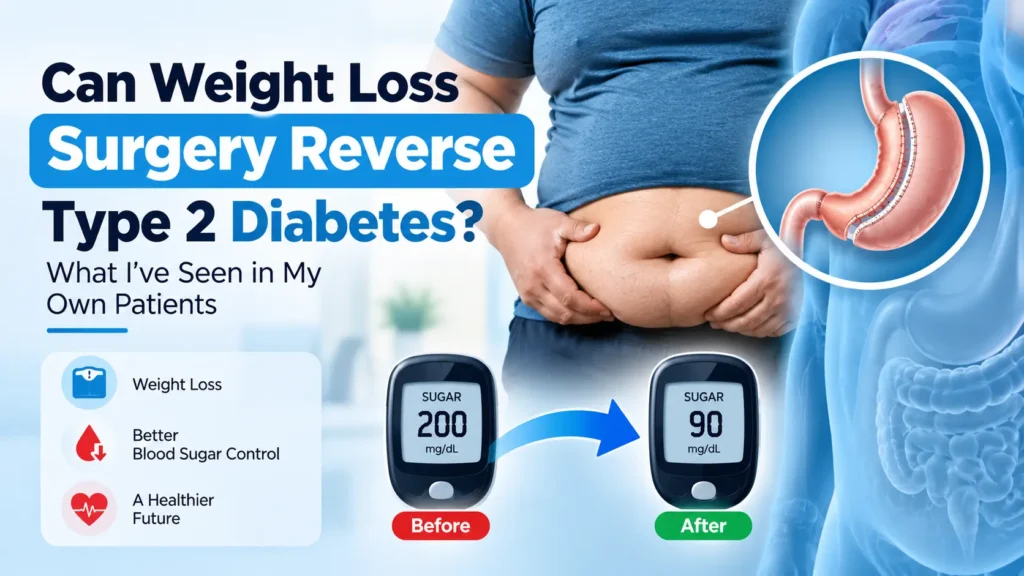
Almost every week, a patient from Zirakpur, Mohali, Chandigarh or Ambala asks me some version of the same question: can bariatric surgery for type 2 diabetes actually get them off their medication. The honest answer, based on what I have seen across my metabolic and bariatric surgery practice, is that for many patients, yes, and often faster than they expect.
Why Weight and Type 2 Diabetes Are So Closely Linked
Excess fat, particularly around the abdomen, makes the body’s cells more resistant to insulin. This insulin resistance is the root problem in most cases of type 2 diabetes. When weight comes down significantly and quickly, insulin sensitivity often improves dramatically, sometimes before a patient has lost even half their excess weight. This is the biological reason bariatric surgery for type 2 diabetes works faster and more reliably than diet and medication alone for many patients with obesity.
What Bariatric Surgery for Type 2 Diabetes Actually Involves
The two procedures I perform most often for this purpose are laparoscopic sleeve gastrectomy, which reduces stomach size to limit food intake and reduce hunger hormones, and gastric bypass, which both restricts intake and changes how the intestine absorbs nutrients, affecting gut hormones tied to blood sugar control. Gastric bypass tends to show a stronger and faster effect on diabetes remission because of these hormonal changes, not just the weight loss itself, which is why I discuss both options carefully with every patient rather than defaulting to one.
What I’ve Actually Seen in My Practice
Across my metabolic and bariatric surgery patients from Zirakpur, Mohali, Chandigarh and Ambala, many patients with type 2 diabetes of less than five to eight years’ duration see either complete remission or a major reduction in diabetes medication within the first six to twelve months after surgery. Patients with a longer history of diabetes, or who already require insulin, often see meaningful improvement and lower medication needs, even when full remission is not achieved. The earlier a patient with obesity and type 2 diabetes considers bariatric surgery, generally the better the metabolic outcome.
Who Is a Good Candidate
I evaluate candidates for bariatric surgery for type 2 diabetes based on body mass index, duration and control of diabetes, other obesity-related conditions like high blood pressure or sleep apnea, and overall fitness for surgery. Indian and international guidelines now recommend considering metabolic surgery at a lower BMI threshold for patients of South Asian origin with poorly controlled type 2 diabetes, compared to the general population, because Asian body composition carries more visceral fat at a lower BMI.
What Happens After Surgery
Diabetes control typically improves within days of surgery, often before significant weight loss has even occurred, particularly after gastric bypass. This early change is driven by shifts in gut hormones rather than weight loss alone. Patients are closely monitored after surgery so that diabetes medication, particularly insulin, can be adjusted down safely and gradually rather than stopped abruptly. This is also where our structured nutritional and lifestyle programme after weight loss surgery becomes important, since long-term diabetes control depends on sustainable eating habits, not the operation alone.
Risks and Realistic Expectations
No surgery is without risk, and bariatric surgery for type 2 diabetes is not guaranteed to work the same way for every patient. Some patients see partial improvement rather than full remission, and diabetes can return years later if significant weight is regained. I am transparent with every patient about this, because setting realistic expectations upfront leads to better long-term outcomes and better decisions about lifestyle after surgery.
Questions Patients From Zirakpur, Mohali and Ambala Often Ask Me
Is this surgery safe if I have been on insulin for years?
Long-standing, insulin-dependent diabetes can still improve significantly after surgery, though full remission is less likely than in patients with a shorter diabetes history. I evaluate kidney function, heart health and overall fitness carefully before recommending surgery in these cases.
How much weight do I need to lose before the surgery is even considered?
Weight loss surgery is not something patients need to qualify for by losing weight first, it is the treatment itself. What matters is your current BMI, diabetes control and related health conditions, which we assess together during consultation.
Will my diabetes medication stop immediately after surgery?
Not immediately. Blood sugar often improves within days, but medication, especially insulin, is adjusted down gradually and safely under monitoring rather than stopped all at once.
Is metabolic surgery covered under health insurance in India?
Many insurers now cover bariatric and metabolic surgery when specific medical criteria are met, such as BMI thresholds combined with obesity-related conditions like type 2 diabetes. I recommend checking your specific policy, and our team can help with documentation.
What if I only have prediabetes, not a full diagnosis of type 2 diabetes yet?
Prediabetes combined with significant obesity is actually one of the best windows to intervene, since surgery at this stage can often prevent progression to full type 2 diabetes altogether.
My Advice to Patients Considering This Option
If you have type 2 diabetes that is difficult to control despite medication, and you also carry significant excess weight, it is worth a proper evaluation for bariatric surgery for type 2 diabetes rather than waiting until complications like kidney or eye damage develop. I see patients for this evaluation at Doctor Square Hospital and Trinity Hospital in Zirakpur, Curasia Hospital in Dhakoli, and Adesh Medical College Hospital in Mohri, Ambala Cantt, and the first step is always a detailed discussion of your health history, not an immediate recommendation for surgery.