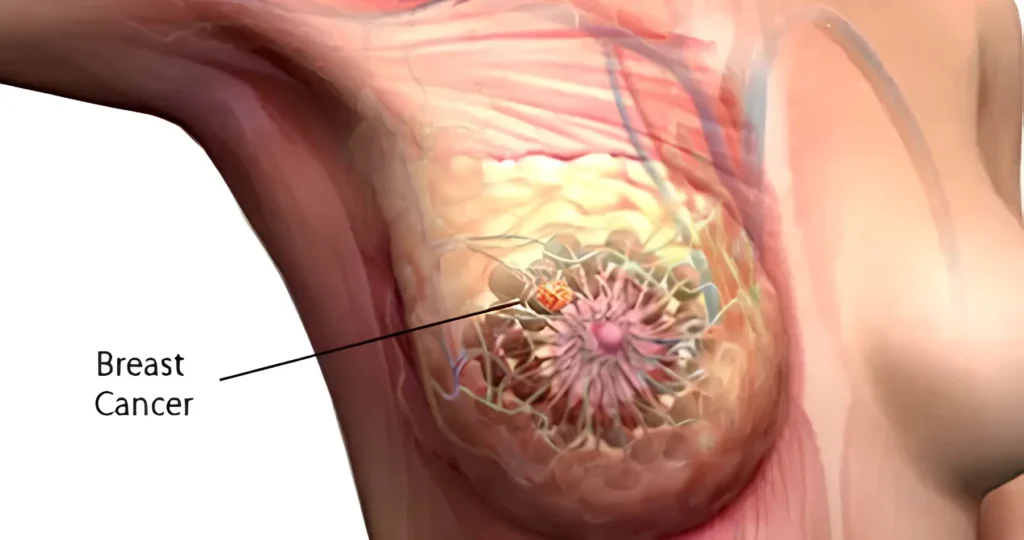
If you have just been diagnosed, the decision ahead of you is usually not whether to have surgery, but which operation and in what order. This page explains both, plainly.
The two operations
There are two ways to remove breast cancer surgically.
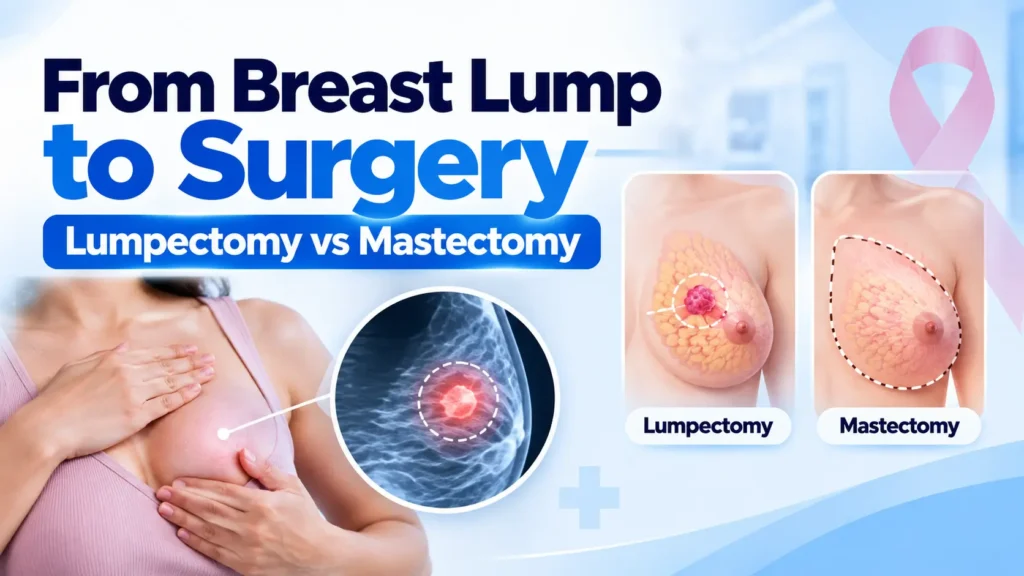
Breast conservation surgery
The tumour is removed along with a rim of normal tissue around it. The breast is kept. It is also called a lumpectomy or wide local excision.
Breast conservation is almost always followed by radiotherapy to the remaining breast tissue. The two together are what make it safe. Skipping the radiotherapy is not an option in most cases.
Mastectomy
The whole breast is removed. This is advised when the tumour is large relative to the breast, when there is more than one tumour in different parts of the breast, when the cancer is widespread within the ducts, or when radiotherapy is not possible for you.
Which one is right for you
This is decided by the tumour, not by preference alone. The factors are the size of the tumour compared with the size of the breast, where it sits, whether there is more than one, and whether you are able to have radiotherapy afterwards.
One point matters more than any other, and it is often not explained clearly: for patients suitable for breast conservation, long-term survival is the same as with mastectomy. Removing more breast does not mean removing more cancer risk. A mastectomy is advised when conservation would not clear the disease, not because it is the safer choice in general.
If the tumour is currently too large for conservation, chemotherapy given before surgery can sometimes shrink it enough to make conservation possible. Ask whether this applies to you.
The lymph nodes
Breast cancer spreads first to the lymph nodes in the armpit, so these are assessed during the same operation. What is done depends on whether the nodes appear involved before surgery.
If scans and examination suggest the nodes are clear, only the first few draining nodes are removed and tested. If cancer is found in the nodes, or they were already known to be involved, more of them are removed.
This part of the surgery is worth understanding, because removing more nodes carries a higher chance of long-term arm swelling, called lymphoedema. Ask your surgeon which is planned in your case and why.
Before surgery
You will usually need a confirmed biopsy, imaging of both breasts, tests to check the cancer has not spread elsewhere, and the hormone receptor and HER2 status of the tumour. That last one influences treatment as much as the surgery does.
Surgery should not be planned before this work-up is complete. Rushing to operate without knowing the full picture can mean the wrong operation.
Recovery
Breast conservation is usually a day-care procedure or a one-night stay. A mastectomy typically means one to two nights, and you go home with a drain in place for roughly one to two weeks.
Most people return to desk work within two to three weeks. Shoulder and arm exercises start early and matter more than people expect. Doing them properly prevents long-term stiffness.
What to expect afterwards
Honest points that are often left out:
The pathology report comes back one to two weeks after surgery. It gives the final stage, whether the margins were clear, and the node status. Further treatment is decided from this report, not before it.
Numbness in the skin over the operated area is common and can be permanent.
Fluid collection under the wound, called a seroma, happens often and may need to be drained in the clinic. It is a nuisance, not a complication of concern.
Arm swelling is a risk, mainly after extensive node removal, and it can appear months or years later.
Surgery is rarely the only treatment. Depending on the pathology, you may need chemotherapy, radiotherapy, hormonal tablets for several years, or targeted therapy.
Reconstruction
Breast reconstruction after mastectomy can be done at the same time as the cancer surgery or later. It is a separate decision and should be discussed before the operation, not after, because some choices are harder to reverse once surgery has happened.
Questions worth asking
- Am I suitable for breast conservation, and if not, exactly why?
- Would chemotherapy before surgery change that answer?
- What is planned for my lymph nodes?
- What is my hormone receptor and HER2 status, and what does it mean for me?
- Will I need radiotherapy, and where would I have it?
- What is the plan if the margins come back involved?
Take these to your appointment. A surgeon who answers them clearly is worth more than one who does not.
Frequently asked questions
Will I lose my breast?
Not necessarily. Many patients are suitable for breast conservation. Whether you are depends on the tumour size, its position, and whether there is more than one.
Is a mastectomy safer than keeping the breast?
For patients suitable for conservation, no. Survival is equivalent when conservation is combined with radiotherapy.
How long before I can go back to work?
Two to three weeks for desk work in most cases. Longer if your work is physical or involves overhead arm use.
Do I have to start treatment immediately?
The assessment should happen quickly. The operation itself is planned once staging is complete, and in some cases chemotherapy is deliberately given first.
Can I get a second opinion on the plan I have been given?
Yes, and it is reasonable before major surgery. Bring your scans, biopsy report, slides and blocks.
Consultation
Dr. Ripudaman Singh Lubana holds a Fellowship in Surgical Oncology from Tata Memorial Centre and HBCHRC, Punjab, and has performed over 3500 cancer surgeries. He consults at Doctor Square Hospital on VIP Road Zirakpur, Trinity Hospital in Zirakpur, Curasia Hospital in Dhakoli, and Adesh Medical College Hospital in Mohri, Ambala Cantt.
Bring your reports. Call 8054173528 to arrange a consultation.
This page is for patient education. It is not a diagnosis or a treatment plan. Breast cancer treatment differs for every patient depending on the type, stage and individual health. Every patient is examined and assessed individually before any treatment is advised.