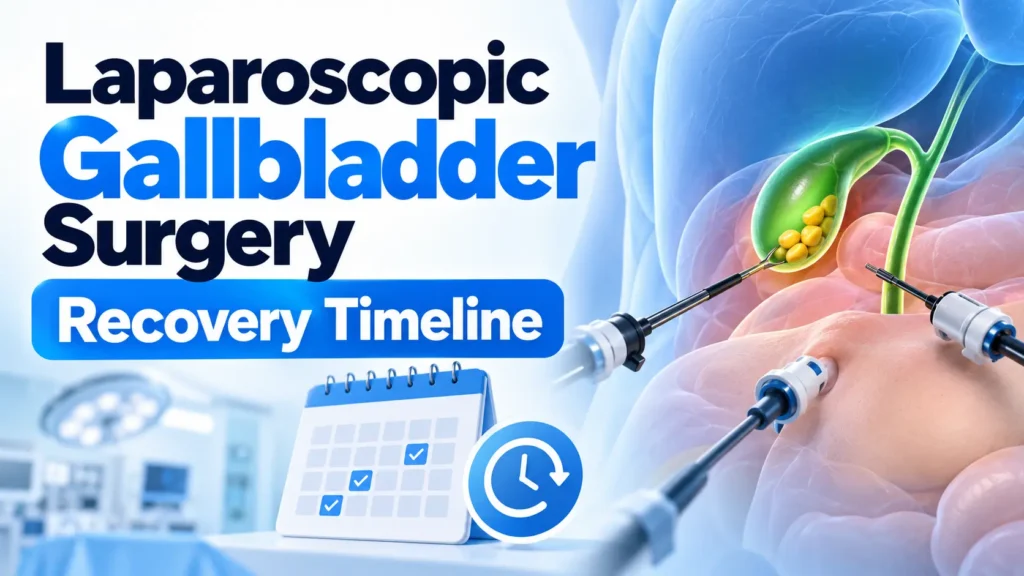
The sleeve gastrectomy is the most commonly performed weight loss operation in the world. It is a single, relatively simple procedure with no rerouting of the intestine, which is much of the reason it has become the default choice.
About three quarters of the stomach is removed along its outer curve, leaving a narrow tube roughly the shape and width of a banana. It is done laparoscopically, through four or five small incisions, and most patients go home within one to two days.
How it works
Two things happen, and the second matters more than most patients expect.
The stomach holds far less. Portions become small, and fullness arrives early in a meal.
Appetite itself falls. The part of the stomach removed is the main site producing ghrelin, the hormone that drives hunger. The American Society for Metabolic and Bariatric Surgery describes this directly: removing that portion of the stomach affects the metabolism, decreasing hunger and increasing fullness, and improving blood sugar control alongside weight loss.
This is why the sleeve is not simply a smaller stomach. Patients who have spent years fighting constant hunger usually notice the change in appetite before they notice the change on the scale.
Who it suits
Someone with obesity that has not responded to sustained attempts at diet, exercise and medication, who is fit for laparoscopic surgery and prepared for lifelong follow-up.
It is often preferred over a bypass when a patient wants a simpler operation with less impact on nutrient absorption, when they take medications where absorption matters, or when previous abdominal surgery makes a bypass more difficult.
One situation genuinely argues against a sleeve: significant acid reflux. A sleeve can make reflux worse, and can cause it in people who did not have it before. Where reflux is already a problem, a bypass is usually the better operation. If nobody has asked you about heartburn before recommending a sleeve, ask why.
Eligibility
The 2022 joint guidelines from ASMBS and IFSO updated criteria that had stood since 1991. Surgery is recommended at a BMI of 35 or above regardless of whether other conditions are present, and should be considered at a BMI of 30 to 34.9 where metabolic disease such as type 2 diabetes exists.
Critically for patients in India, the same guidelines state that thresholds should be adjusted for Asian populations, where a BMI above 25 indicates clinical obesity and surgery should be offered from a BMI above 27.5. South Asians develop diabetes and cardiovascular disease at lower body weights and with more abdominal fat than Western populations, which is the reason for the adjustment.
If you have read Western criteria and concluded you do not qualify, they may not apply to you. Eligibility is still assessed individually, taking account of your conditions, previous attempts, fitness for anaesthesia and readiness for follow-up.
Before surgery
An endoscopy to examine the stomach, checking for a hiatus hernia, reflux damage or ulcers, since these influence whether a sleeve or a bypass is the better choice.
Blood tests including sugar, thyroid, iron, vitamin B12 and vitamin D. An ultrasound of the abdomen, which frequently finds gallstones and fatty liver. Assessment for sleep apnoea, and heart and lung fitness where relevant.
A pre-operative diet for two to three weeks is standard. It shrinks the liver, which sits directly over the stomach and has to be lifted during surgery. This is not about weight loss before the operation, it is about making the operation safer.
The operation
Four or five incisions of half to one centimetre. The stomach is freed along its outer curve and divided with a stapling device, leaving the narrow tube. The removed portion is taken out through one of the ports.
It takes around an hour to an hour and a half under general anaesthesia. The intestine is not cut or rerouted at any point, which is the fundamental difference from a bypass.
The removed part of the stomach cannot be put back. This operation is not reversible.
Recovery
Most patients stay one to two days. You will be up and walking within hours, which matters for preventing clots.
The diet is staged over roughly six weeks: clear liquids, full liquids, pureed food, soft textures, then normal food. Protein comes first at every stage, and you will be given specific targets.
Small sips rather than gulps, and no drinking with meals, because the new stomach cannot accommodate both. Desk work is usually realistic within one to two weeks, with heavy lifting and strenuous exercise deferred for around four weeks.
What to expect from it
Weight loss is typically most rapid in the first six months and continues over twelve to eighteen months. Individual results vary considerably and no specific figure can be promised.
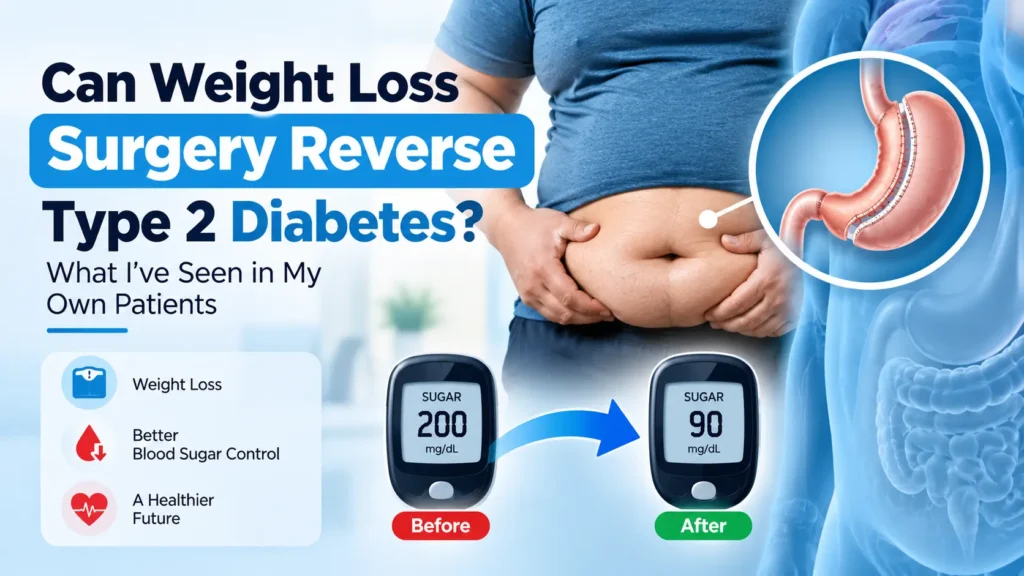
Improvement in type 2 diabetes, blood pressure, sleep apnoea and fatty liver is common, and blood sugar frequently improves within days, before much weight has been lost.
The honest framing is this. The operation makes eating less genuinely achievable rather than a daily battle of willpower. It does not select your food, and high-calorie liquids, frequent snacking and a return to old patterns will defeat it. The patients who keep their results are the ones who stay engaged with follow-up for years.
Risks
Staple line leak. The most serious complication, uncommon, and the reason for close monitoring in the first days. Signs include fever, a fast heart rate, worsening abdominal pain and breathlessness.
Bleeding, usually from the staple line, occasionally requiring transfusion or a return to theatre.
New or worsened acid reflux. The most common long-term issue after a sleeve. In a minority of patients it becomes severe enough to require conversion to a bypass later.
Narrowing of the sleeve, which causes difficulty keeping food down and may need endoscopic dilatation.
Gallstones, which can form with rapid weight loss.
Nutritional deficiencies, less pronounced than after a bypass, but iron, vitamin B12 and vitamin D still need supplementing and monitoring.
Clots in the legs or lungs, reduced by early walking and preventive medication.
Supplements and follow-up
Lifelong daily multivitamin, and usually iron, vitamin B12, vitamin D and calcium, with blood monitoring at set intervals.
Deficiencies develop quietly. Fatigue, hair thinning and nerve symptoms appear only once the problem is established, which is why the blood tests are scheduled rather than done when you feel unwell.
Follow-up continues for years. This is not an operation that ends at discharge.
Questions worth asking
- Do I have reflux, and does that make a bypass a better choice for me?
- What did my endoscopy show?
- What weight loss is realistic in my case?
- What is the plan if my diabetes improves, in terms of adjusting medication?
- What supplements will I take, and how often will bloods be checked?
- What happens if I develop reflux afterwards?
Frequently asked questions
Is a sleeve gastrectomy reversible?
No. Part of the stomach is permanently removed. It can, however, be converted to a bypass later if needed, most commonly for severe reflux or inadequate weight loss.
Sleeve or bypass?
Neither is better in general. The sleeve is simpler with less effect on nutrient absorption. The bypass usually gives more weight loss, has a stronger effect on diabetes, and is preferred where reflux is significant.
How much weight will I lose?
Most loss occurs over the first twelve to eighteen months, and results vary considerably between individuals. No specific number can be guaranteed.
Will my diabetes improve?
Improvement is common and often starts within days. Complete remission occurs in some patients but cannot be promised, and depends heavily on how long you have had diabetes.
How long until I am back at work?
One to two weeks for desk work. Around four weeks before heavy lifting or strenuous exercise.
Will I need vitamins forever?
Yes. The requirement is lighter than after a bypass, but it is lifelong, with blood monitoring at set intervals.
Can I get pregnant afterwards?
Yes, and fertility often improves with weight loss. Pregnancy is generally advised to wait around twelve to eighteen months until weight has stabilised, with nutritional monitoring throughout.
Can the weight come back?
Some regain from the lowest point is normal. Significant regain usually follows a return to old eating patterns and disengagement from follow-up. Revision surgery is an option where it happens.
References
- American Society for Metabolic and Bariatric Surgery, Sleeve Gastrectomy
- Eisenberg D, Shikora SA, Aarts E, et al. 2022 ASMBS and IFSO Indications for Metabolic and Bariatric Surgery. Obesity Surgery, 2023
Consultation
Dr. Ripudaman Singh Lubana holds a University Diploma in Minimal Access Surgery from IRCAD, France, and a Certificate Course in Endoluminal Bariatric and Metabolic Surgery from IRCAD India. Both surgical and endoscopic options are available under one surgeon, so the recommendation reflects what suits you rather than what is on offer.
He consults at Doctor Square Hospital on VIP Road Zirakpur, Trinity Hospital in Zirakpur, Curasia Hospital in Dhakoli, and Adesh Medical College Hospital in Mohri, Ambala Cantt.
Call 8054173528 to arrange an assessment. Being assessed does not commit you to surgery.
This page is for patient education. It is not a diagnosis or a treatment plan. Eligibility, procedure choice and results differ for every patient depending on weight, medical conditions and individual circumstances, and no specific weight loss outcome is promised. Every patient is examined and assessed individually.